Australian String Quartet. Voyager. The Neilson, ACO on the Pier. October 19, 2026
Four and a half stars
First, full disclosure. I collaborated with the Australian String Quartet in making a short video on the amusing, if tangential, connections between Beethoven’s masterpiece, the String Quartet in B flat major, Opus 130, and the joke canon, Kühl nicht Lau, WoO 191, based on the name BACH. He wrote the canon after a champagne-fueled meal with the composer Friedrich Kuhlau, shortly after commencing the original finale of that quartet, the Grosse Fuge. Fortunately, that in no way diminished the vivid experience of the ASQ’s performance of Opus 130 in the wonderfully live acoustic space of The Neilson, the charming performance space at the Australian Chamber Orchestra’s headquarters on a wharf on Sydney’s Walsh Bay.
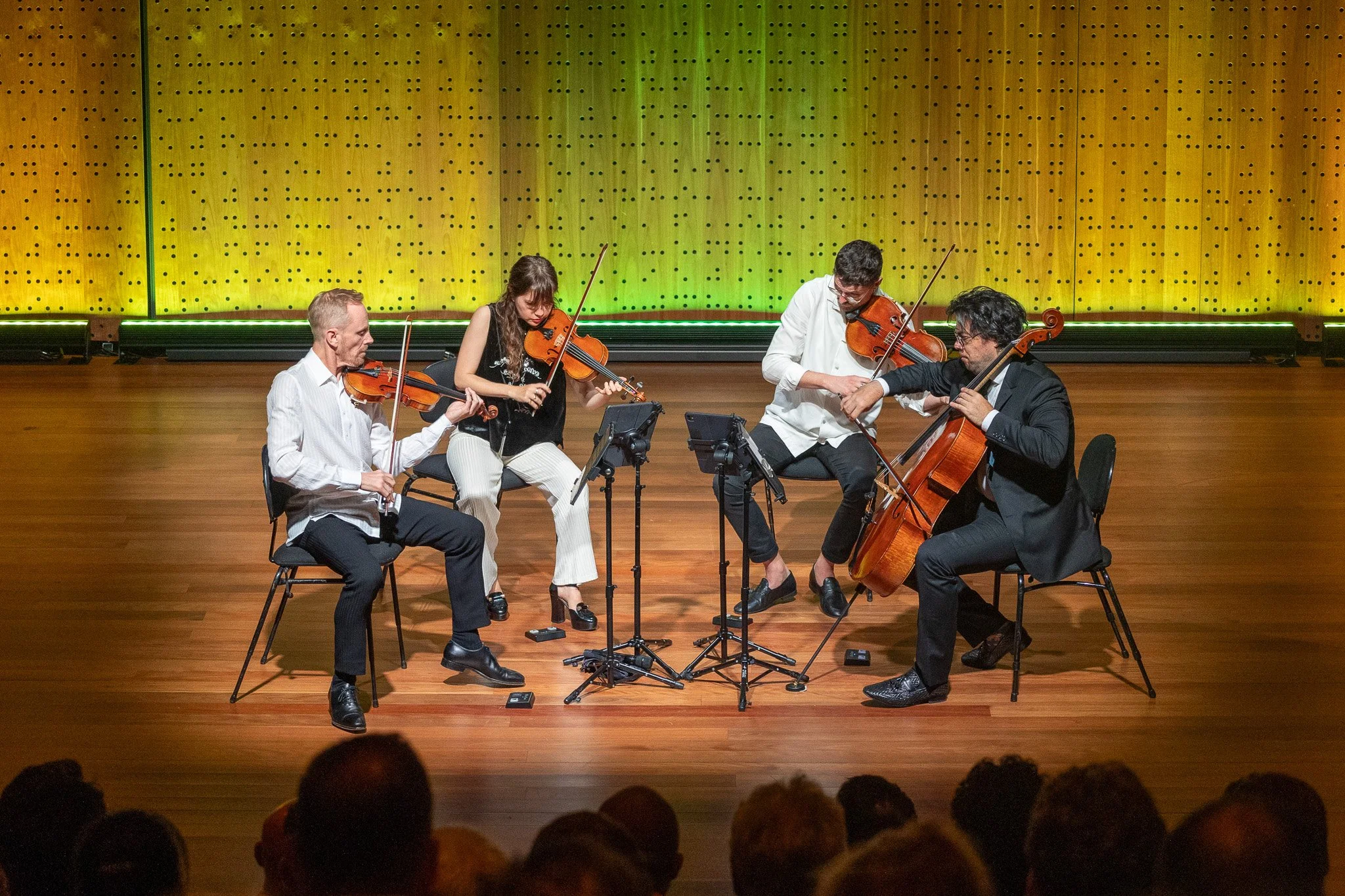
ASQ at The Neilson, ACO on the Wharf, Sydney. Image credit: Kane Moroney
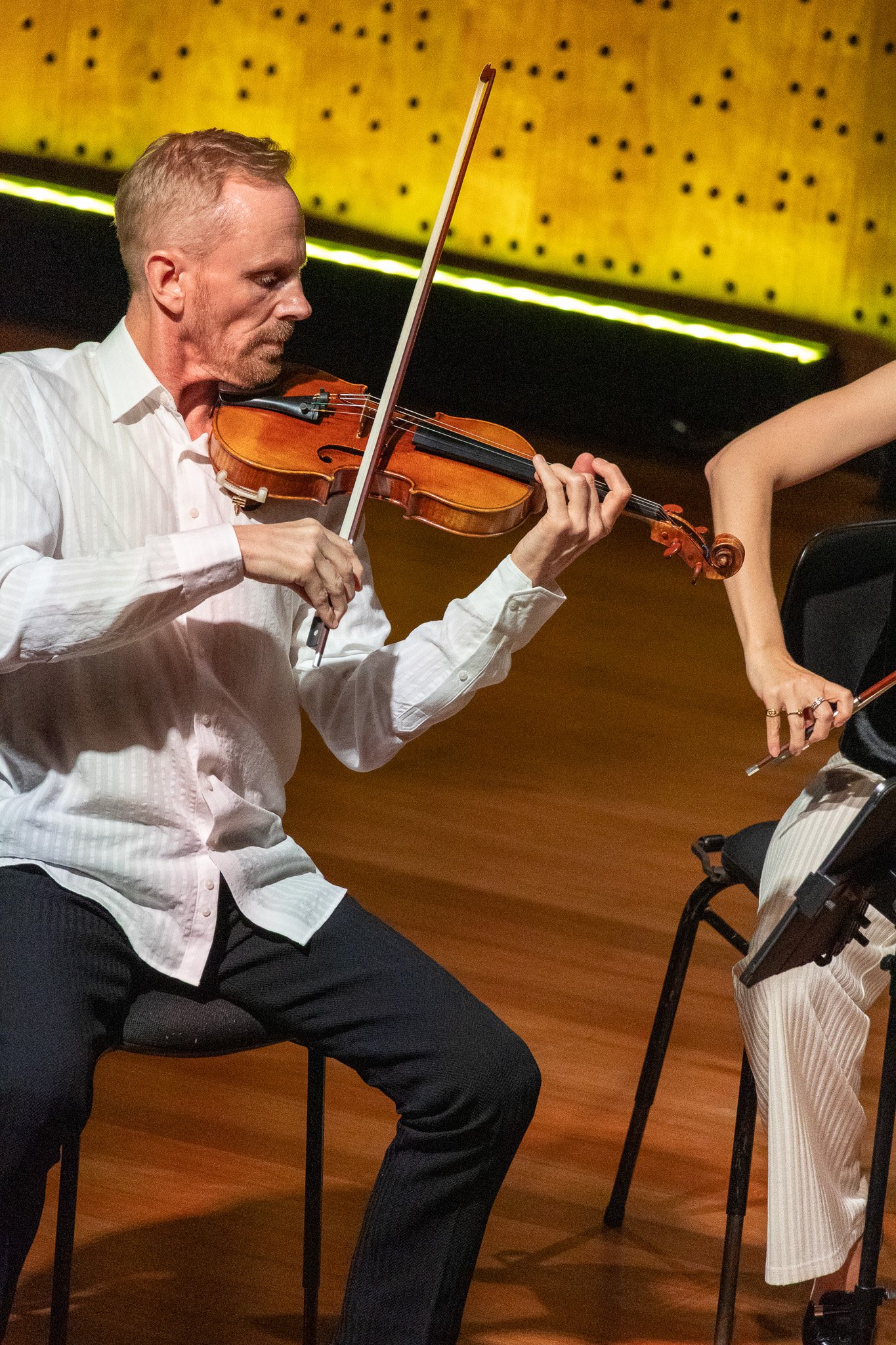
ASQ Leader Dale Barltrop: Image credit: Kane Moroney
Speaking just before the performance, leader Dale Barltrop spoke of the effect of the surging and pulling back of energy in the first movement as Beethoven reinserts the music of the introductory Adagio ma non troppo back into the Allegro music that follows. It set the frame for their performance of the whole work as it moved between profound inner thoughtfulness and exhilarating immediacy. In the first movement, they navigated the shift between inward- and outward-focussed expressive thought with fluid mutability and took the second movement with fleet tautness. In the third movement, they captured the momentary seriousness of Beethoven’s opening gesture as he recalls the quartet’s opening, before relaxing into genial insouciance. I particularly appreciated the way, in the fourth movement, Alla danza tedesca, they fastidiously observed Beethoven’s detailed dynamic markings (which in some performances create ungainly distortions) in a manner that preserved the movement’s sublime grace.
The fifth movement, the deeply moving Cavatina, became the moment where the reflective side of the music reached its apogee, yet their playing also preserved the melody’s natural arc and flow. After the introduction, the Grosse Fuge, as finale, surged forward with hang-onto-your-hats wildness before subsiding into quietly rippling calm. The music then took off with scherzo-like impetuousness for the section in 6/8 time before Beethoven starts taking his theme apart with such furious industry that it almost grinds to a halt. The passage in the Coda where Beethoven managed to put it back together again in perfect counterpoint with his first fugue idea was pure joy.
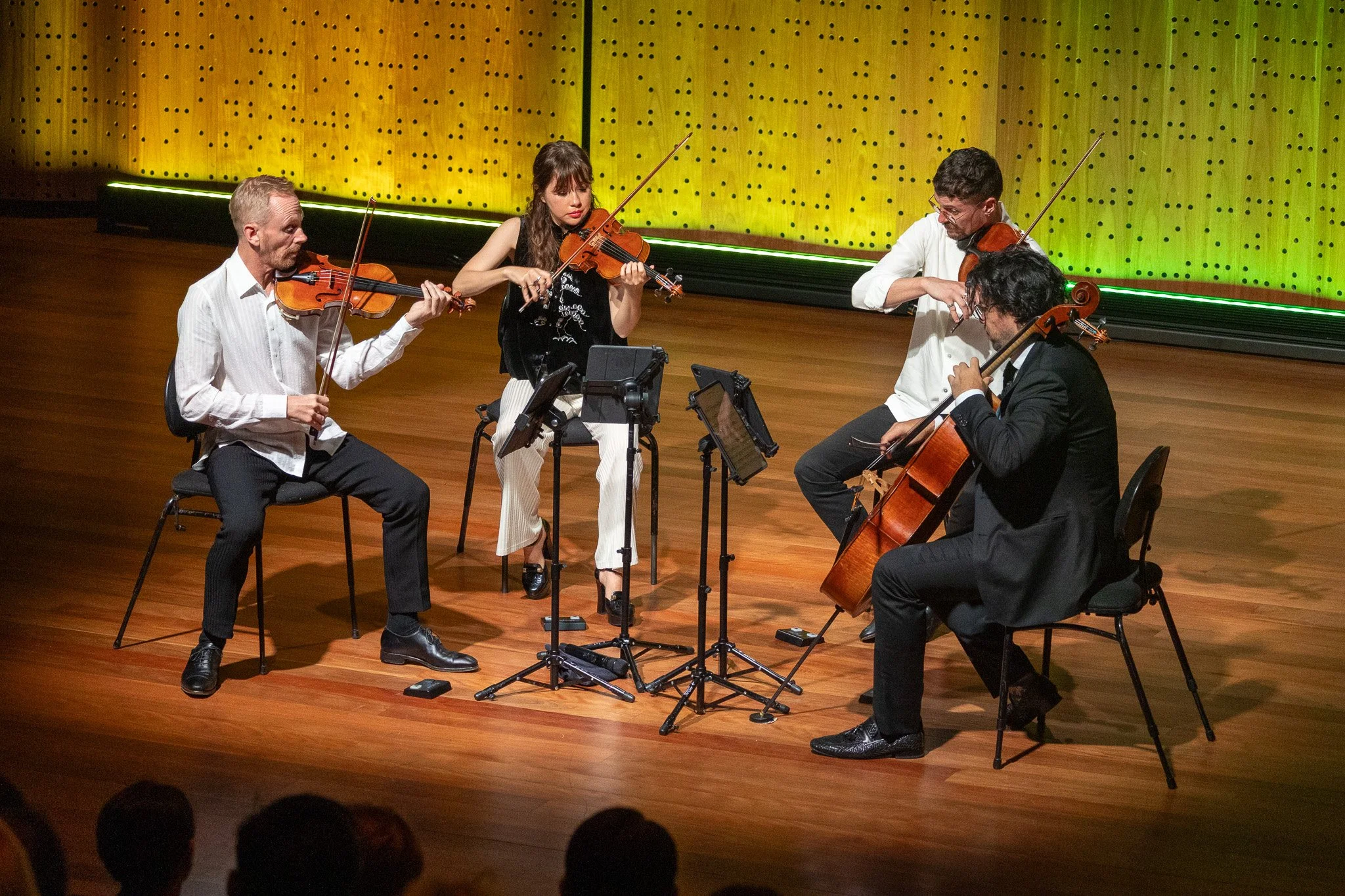
Image credit: Kane Moroney
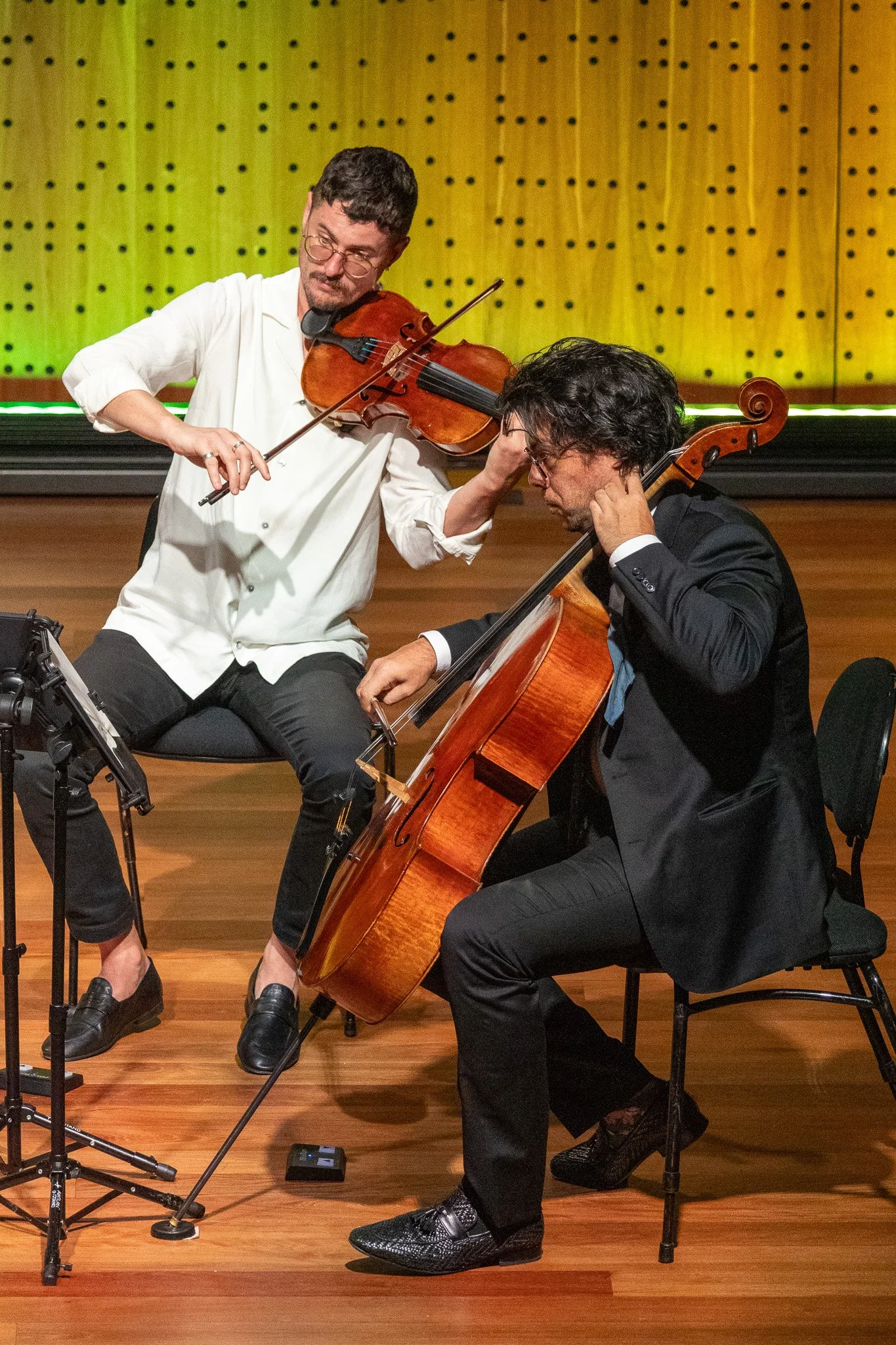
Michael Dahlenburg and Chris Cartlidge. Image credit: Kane Moroney
The first half of the concert ended with a powerful, gritty performance Bartók’s String Quartet No. 4, whose mixture of intense outer movements with lighter inner ones, and a point of profound introspection in the slow movement has some parallels with Beethoven’s Opus 130 (although Bartók placed the slow movement in the middle to create one of his favoured arch-like structures). The ASQ created measured, sometimes grinding seriousness in the first movement preserving most of the unbridled abandon for the finale. After racing ahead like the wind in the second movement, the third started with quiet commanding declamation from cellist Michael Dahlenburg and ended in a place of silent stillness.
The concert’s opening work, Satellites by English composer and violist Garth Knox illustrated, with lively imaginative energy, how later composers opened out the sonic space created by Bartók’s innovations in string quartet writing. Unsurprisingly, this was music informed by deep knowledge of string playing. The first movement, Geostationary, scattered pizzicato notes around the texture using a wide variety of playing techniques to create an appearance of stasis and speed. Sounds hovered in stillness and whirled past like unpredictable pieces of space junk. Spectral Sunrise took the listener through three sonic ‘sunrises’ (from Barltrop, Dahlenburg and violist Chris Cartlidge) and one ‘space walk’ (from second violinist Francesca Hiew), each arising from spectra created by delicately nurtured harmonics. Each sunrise grew from small quiet sounds that slowly crept into silent spaces like light catching the edge of an object which gradually glows in radiance. The closing movement Dimensions brought a new vocabulary of bowing techniques into play – vertical, circular and strokes in the air like a nineteenth century schoolmaster wielding a cane. The music juxtaposed metric groupings and rhythms to create a mind state at once vertiginous and playful.
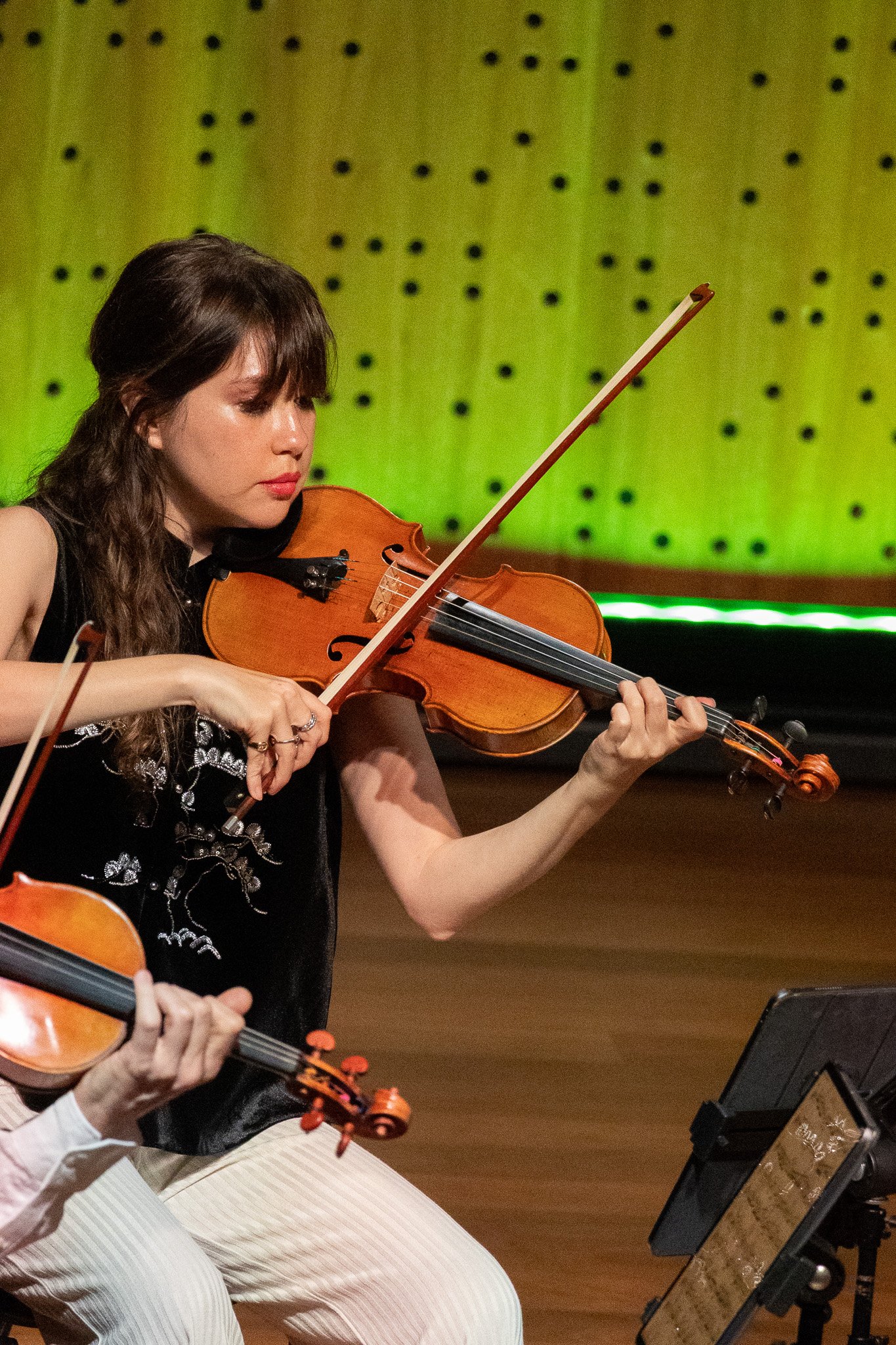
Francesca Hiew. Image credit: Kane Moroney
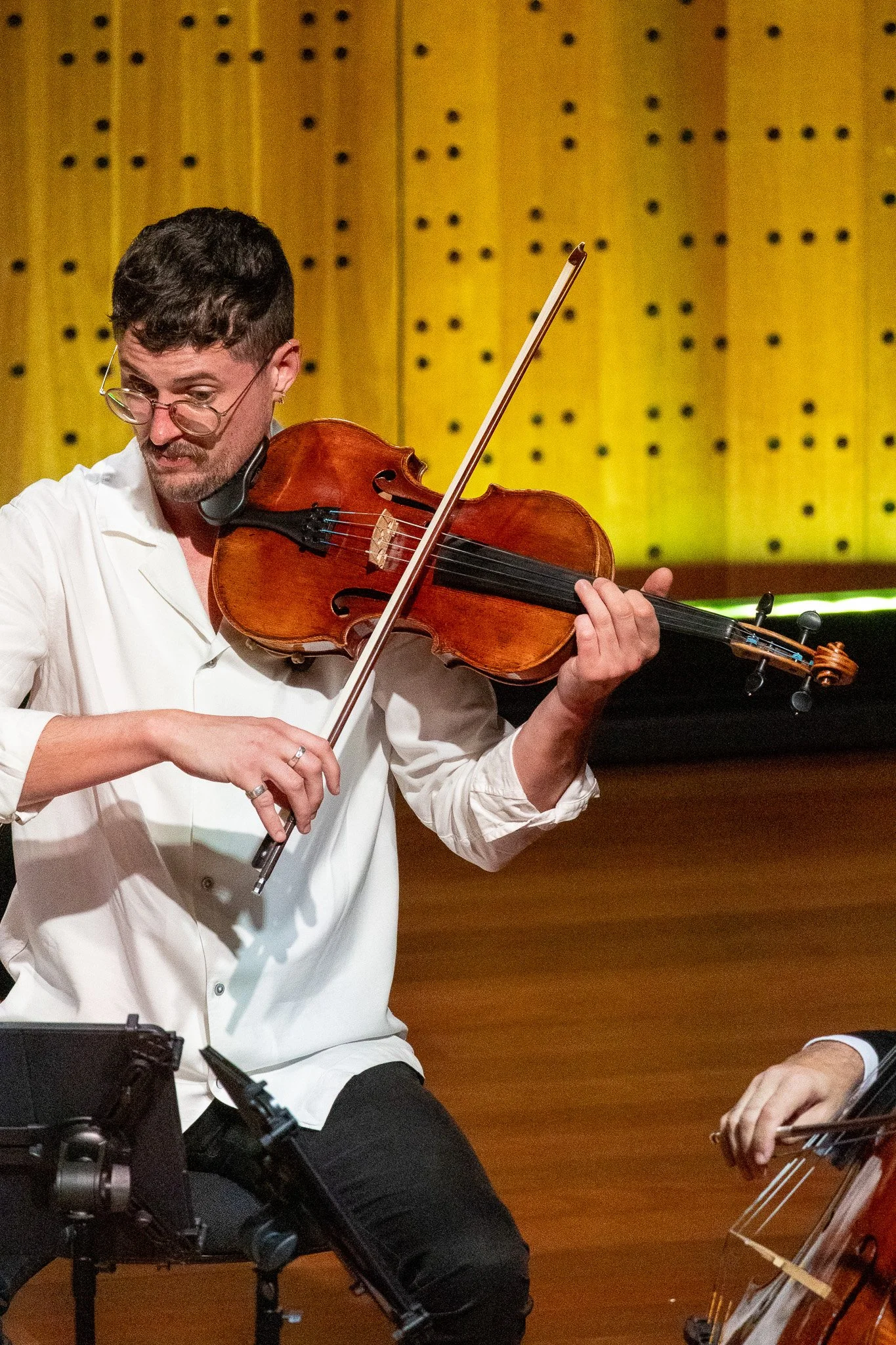
Chris Cartlidge. Image credit: Kane Moroney