Sydney Symphony Orchestra
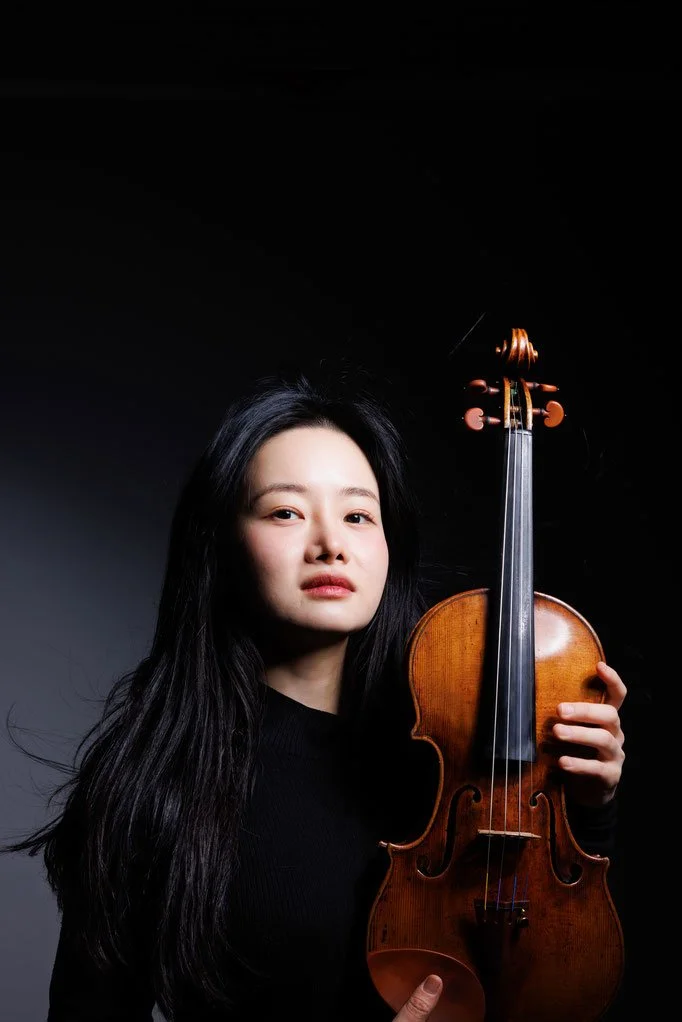
Opera House Concert Hall, October 16 2026,
Donald Runnicles: conductor
Bomsori Kim: violin soloist
Korean violinist Bomsori Kim began Tchaikovsky’s Violin Concerto in D, Opus 35 (1881) with a sound of immaculate polish and sweet smoothness. It is not a large violin tone but one of astringent intensity, dense grain and silky glow, lit up with flashing highlights at moments of sudden impulsiveness. As Tchaikovsky’s main theme rises from its opening measured steps to a peak, it suddenly turns playful for the descent and this passage showed another side of Bomsori’s personality, a vivid musical energy and life which flows into every phrase. It never became overdone or turned into mannered expressiveness (always a danger with this concerto) but sometimes emerged so precipitately than one thought that it could not but break the perfectly finished surface. This, however, never happened, and the duality of serenity and vitality provided a sustaining point of tension and interest within her artistic persona. The process seemed encapsulated in the first movement cadenza, where she repeatedly rose to the recurring high A with neat precision before allowing the passagework to overflow with dynamism. The muted accompaniment from the orchestral strings for the second movement provided an ideal velvety background for Bomsori’s finely woven radiance and both she and conductor Donald Runnicles sustained the slow music with shared inner pulse. After a fiery start, she led the finale with bracing velocity, Runnicles maintaining disciplined precision in the accompaniment through discreet signals. For the second theme, Bomsori injected a small skip into the swagger, and, in the coda brought the concerto to a close with growing waves of unstoppable energy.
Violinist Bomsori Kim with her 1725 Guarneri del Gesù ‘ex-Moller’, (loaned by the Samsung Foundation of Culture and the Stradivari Society of Chicago).
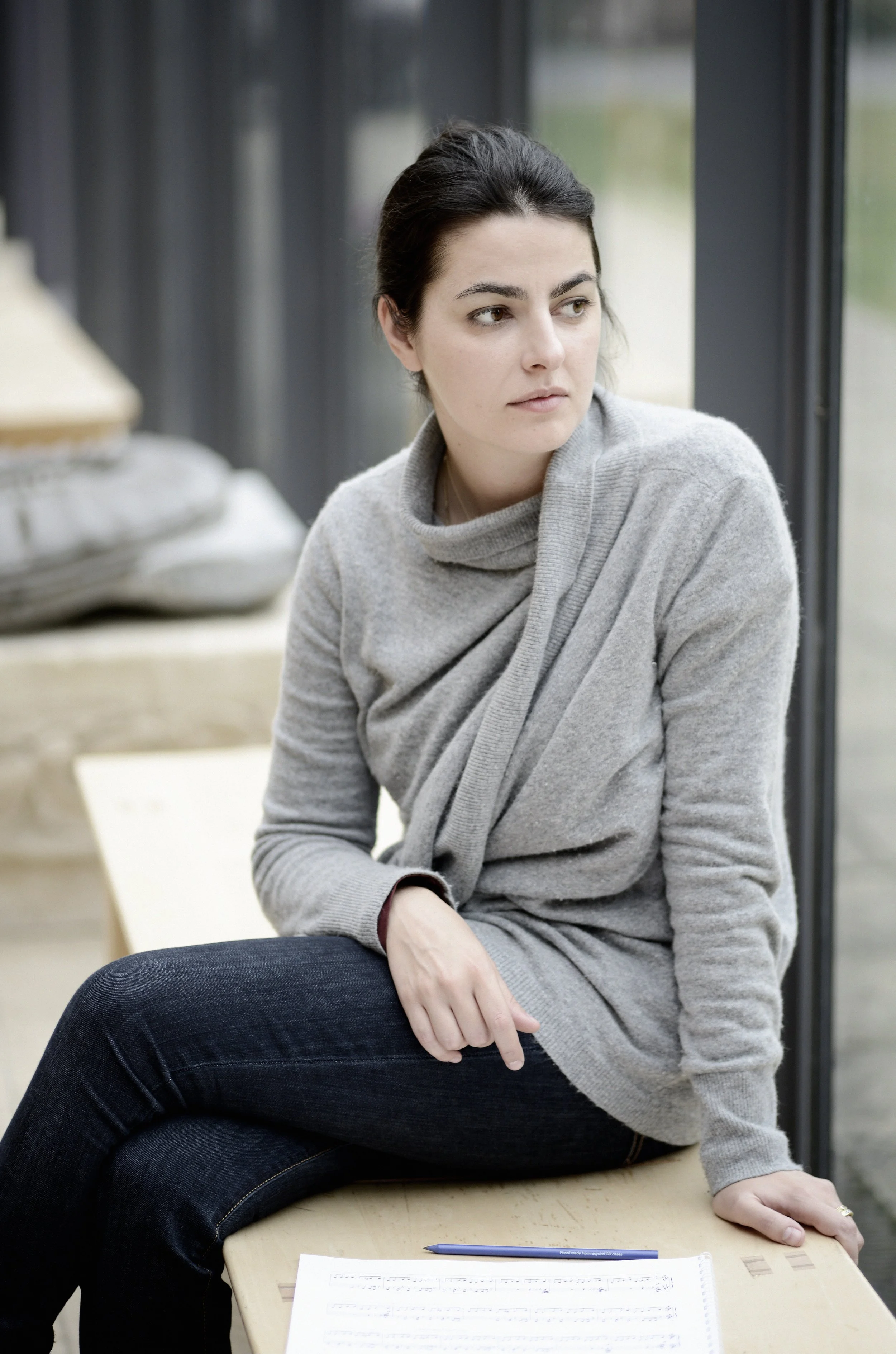
Bulgarian composer Dobrinka Tabakova
The concert began with a short but effective celebratory overture, Orpheus’ Comet (2017) by Bulgarian composer Dobrinka Tabakova, commissioned by the BBC and the European Broadcasting Union to commemorate 50 years of fruitful collaboration. It began with an abrupt snap and burbling horn textures with jabs from the other brass which the composer said was inspired by the thought of bees represented in Virgil’s Georgics. The ‘bees’ idea was moved around the orchestra and, except for interruptions from a chorale in lower brass, remained in the background throughout. The perspective changed, however, as a broader melody emerged from the flute and took hold, giving the impression that the seething texture of the opening had gradually receded like merging constellations. The pieced reached a climax with a quotation from the exhilarating fanfare which opens Monteverdi’s 1607 opera, Orpheo (whose libretto also drew from Virgil’s Georgics and whose fanfare provided the signature tune of Euroradio).
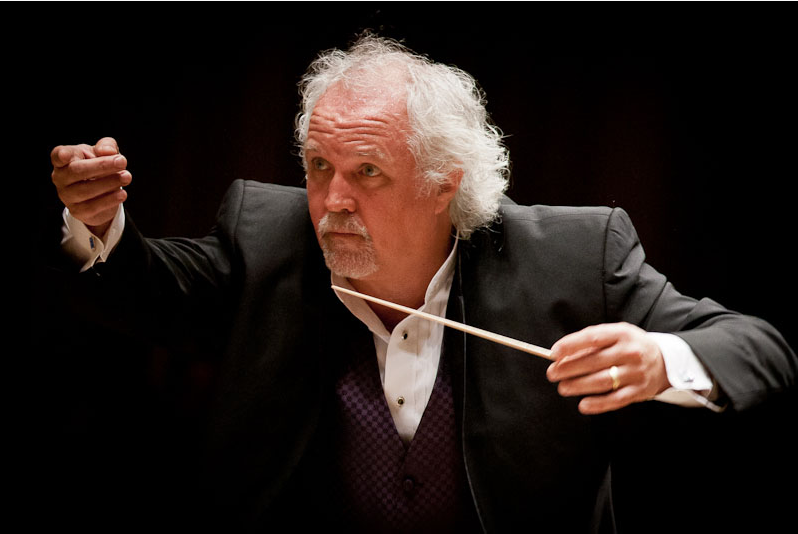
Conductor Sir Donald Runnicles
After interval, Runnicles forsook the baton he had used in the concerto for Beethoven’s Symphony No. 7 in A, Opus 92 (1813), establishing a sense of breadth in the introduction to the first movement, which was maintained in the main vivace section. Runnicles’ approach seemed to be to let the orchestral players (led by Associate Concertmaster Harry Bennetts) own the music’s insistent drive, restricting himself to subtle signals which ensured rhythmic discipline and highlighted the work’s architecture. It was an approach that created space for felicitous moments such as oboist Shefali Pryor’s elegant upbeat at the recapitulation and allowed the horns to recover from a blemished chord to provide a moment of blazing splendour in the coda. The solemnity of the famous Allegretto in the second movement was unrushed and excellently balanced, the fugal section emerging with detailed clarity. The third movement was fleet, with elegant tapering in the Trio theme. For much of the finale, Runnicles was content to allow the disciplined SSO players to run like the wind, before changing gears with authoritative decisiveness to for the coda.