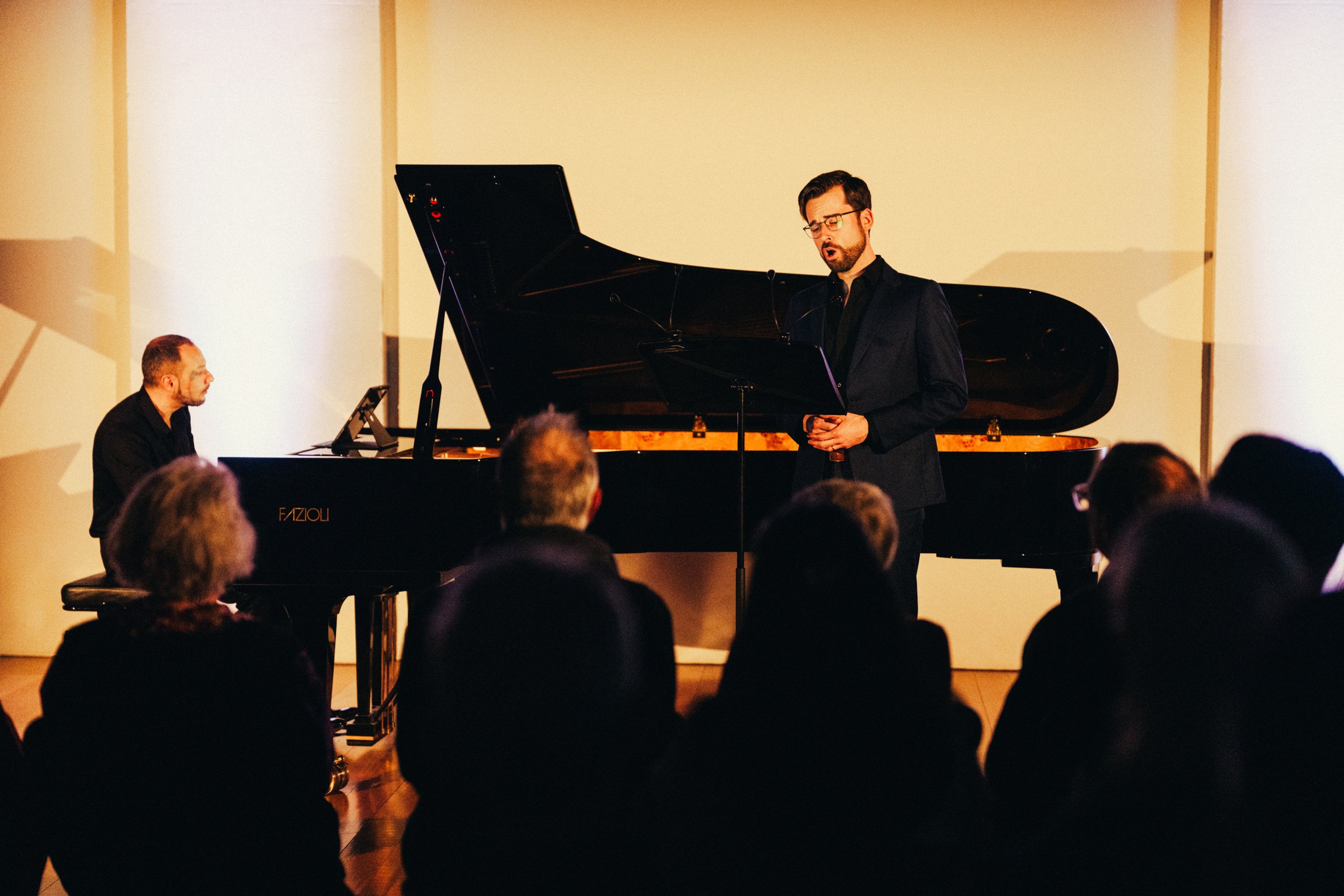
Images by Charlie Hardy
Michelangelo Visions. Sydney Chamber Opera. Jeremy Kleeman and Jack Symonds. The Church, Alexandria. September 17
Peter McCallum
(Four and a half stars)
It is impossible to know how posterity would have treated the poetry of Michelangelo had he not also been a giant of Italian Renaissance sculpture, painting and architecture. However, baritone Jeremy Kleeman and pianist and composer Jack Symonds made a fair case in this program of song cycles using Michelangelo’s words by Wolf, Symonds and Shostakovich, that, at the very least, Michelangelo’s towering achievements elsewhere diverted the attention that his poetic voice deserved. In this recital that voice echoed through Romantic richness, modernist spareness. and much that lies between, with a sense of majestic awe.
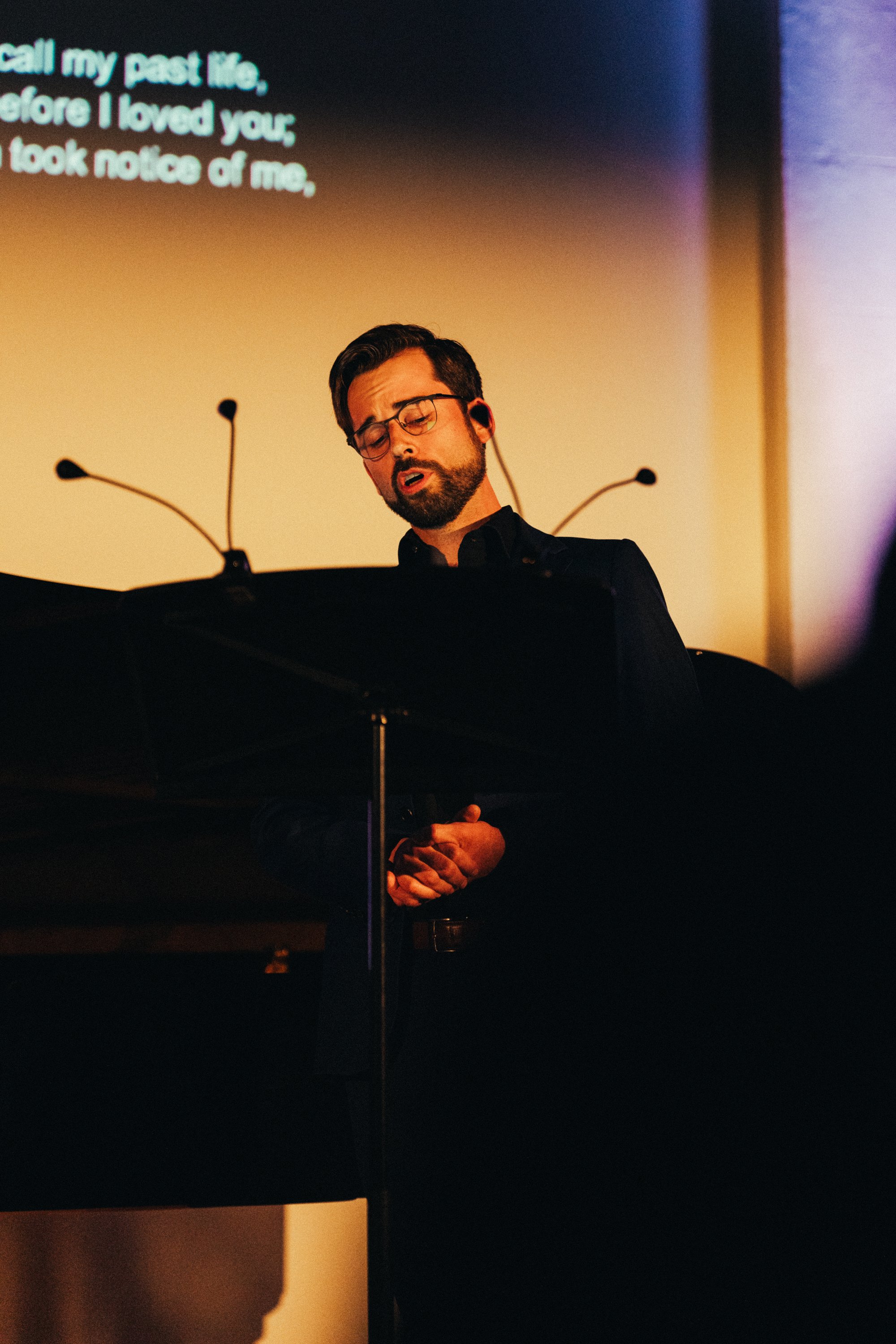
Kleeman sang Wolf’s Michelangelo-Lieder with a finely burnished sound in mid and upper register and wonderfully grainy resonance in low notes, while Symonds nurtured Wolf’s Wagnerian harmonic palette with insight. The second song, Alles endet was entstehet (‘All that begins must end”), struck a particular resonance with Wagner’s motives, harmonies and moods, but Wolf is, to state the obvious, more economical with his material. This performance presented his terse, questing, luxuriant phrases, with subtlety and understanding.
Wolf’s and Shostakovich’s works at either end of this concert, provided a telling frame for Symonds’ own work, In Stone, a setting of six poems by Michelangelo receiving its world premiere. A distinguishing feature of Symonds’ cycle, however, is that whereas Wolf and Shostakovich turned to Michelangelo as a manifestation of their respective late styles, Symonds approaches him as a young composer in thriving mid-career. In Stone conveyed a striking combination of imagination, spontaneity, sincerity and mastery of the medium. The first song wrestled with the struggle of creation, and of dragging into existence the final artistic form, which, in Michelangelo’s view, was already silently present in the marble. While the piano hacked out splintering figurations, Kleeman rose through the texture with a rounded tone of noble calm. The love poems in the cycle adopted more fluent, intertwined strands of expression. The third, however, sprang forward in the spirit of a scherzo, with spiky irascibility, expressing Michelangelo’s bodily discomfort while painting the Sistine Chapel, at the same time voicing anxiety that, in all likelihood, no-one will think it is any good.
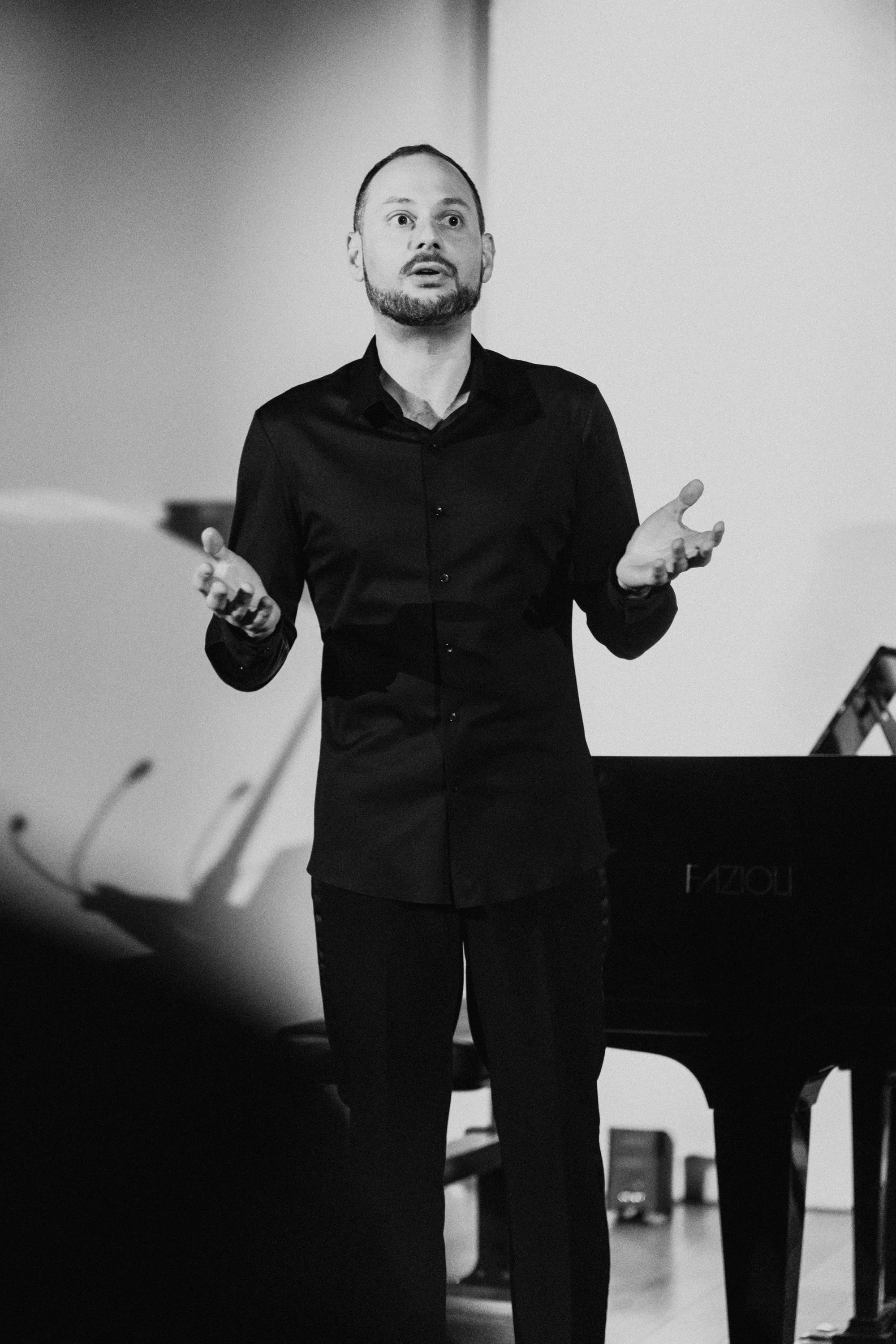
This cycle joins two other Michelangelo-inspired works by Symonds, I keep your burning glances for baritone piano and percussion, and Releasing the Marble for flutes, double bass and percussion. Bringing all three together on a single CD would provide a welcome nexus for comparison.
To open the first song, Truth, of Shostakovich’s Suite on Verses of Michelangelo, Opus 145, Symonds hammered out strange obstinate counterpoint which Kleeman joined with the words “There is truth in the old sayings”. It was one of those obsessive moods in Shostakovich where it is hard to tell where irony ends and truth begins, and here the sense of disorientation was increased by the austerity of the lines. The eleven songs chart a wide expressive span, and, as Symonds noted before the performance, form themselves into groups which could be likened to the movements of a larger work. In the second, third and fourth songs (Morning, Love and Separation), Kleeman explored quieter shades, receding to tones of delicate, hushed tenderness. The fifth song, Anger, ushered in a more assertive bracket. Dante opened with arresting clarion calls that seem to echo into a void as though the world has forgotten the poet’s greatness, while To the Exile was Shostakovich’s salute to the recently-exiled Solzhenitsyn. The hammering sounds of Creativity recalled the evocations of chipping stone that Symonds had created in his first song, though here the emphasis was on the mighty blows rather than the scattering fragments. The final bracket, Night, Death and Immortality explored fading light and growing darkness. In Immortality, however, the piano keeps portentousness in check, and Symonds played the bright opening as though it were the tune of a nursery music-box. After Kleeman rose to an imposing climax, the opening mood returned and tinkled away to an unobtrusive fade-out. The gesture brought to mind Schubert’s Der Leiermann at the end of Winterreise, but with an unexpected aversion to anything forlorn or tragic. After a lifetime of devastating utterances, Shostakovich, in this final song (though not his final work), was apparently content to let thoughts on immortality softly and suddenly vanish away.