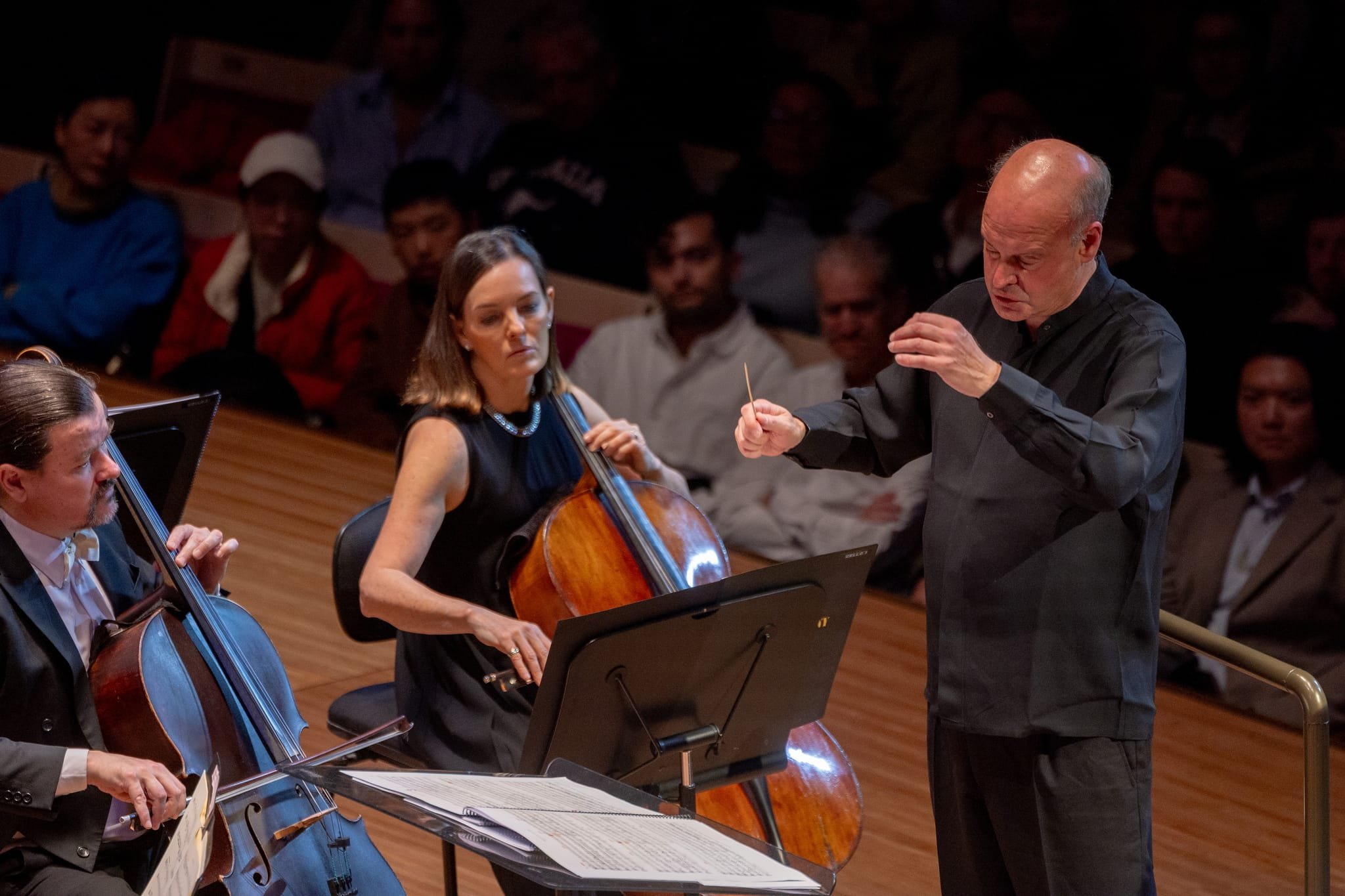
Photo credit: Sydney Symphony Orchestra
Mozart’s Requiem with Stephen Layton. Sydney Symphony Orchestra. Sydney Philharmonia Choirs. Opera House. September 9
Four starsPeter McCallumConductor Stephen Layton, Sydney Philharmonia Choirs, the Sydney Symphony Orchestra and four radiant soloists performed Mozart’s Requiem with luminous balance, musically tapered phrases and judiciously disciplined tempos of solemnity and grace.
The Introit crept in unassumingly, building with growing premonitory force to the phrase ‘et lux perpetua’, which, like the Kyrie which followed, had emphatic power without undue accent or distortion. The Dies Irae was brisk and vigorous without ever feeling rushed. In the Tuba Mirum and later in the Benedictus, soloists Samatha Clarke (soprano), Ashlyn Tymms (mezzo-soprano), Andrew Goodwin (tenor) and Simon Meadows (baritone) produced textures of coloured sensibility. Meadows led off with clarity and strength, while Goodwin’s sound was attractive and finely grained. Tymms sang with glowing velvety smoothness throughout her range and Clarke created phrases of glistening lightness and elegance. Mozart left the work unfinished at his death, and Layton used the standard, somewhat problematic, completion by Mozart’s pupil Süssmayr, as improved by Benjamin Britten with further adjustments of his own. Every phrase, however, was given the care and polish as though it were by Mozart himself.
In the second half, Layton preceded Vaughan Williams’ Fantasia on a Theme by Thomas Tallis for soloists and double string orchestra with an offstage performance of Tallis’ Why Fum’th in Sight? on which Vaughan Williams work is based. Tallis’s piece was heard through closed doors like an echo from the past and its last chord was joined to the first of the Fantasia without a break. Before stating Tallis’s theme, Vaughan Williams moves quickly from the modal harmonies to the drifting harmonic consonances exploited by Debussy and Ravel at the time and the dialogue between the two string orchestras and soloists resembles, at times, a dialogue between distant centuries. The SSO strings juxtaposed textures of rich resonance and density with delicate hushed moments and intertwining contrapuntal delicacy, notably from violin (Andrew Haveron) and viola (Richard Waters).
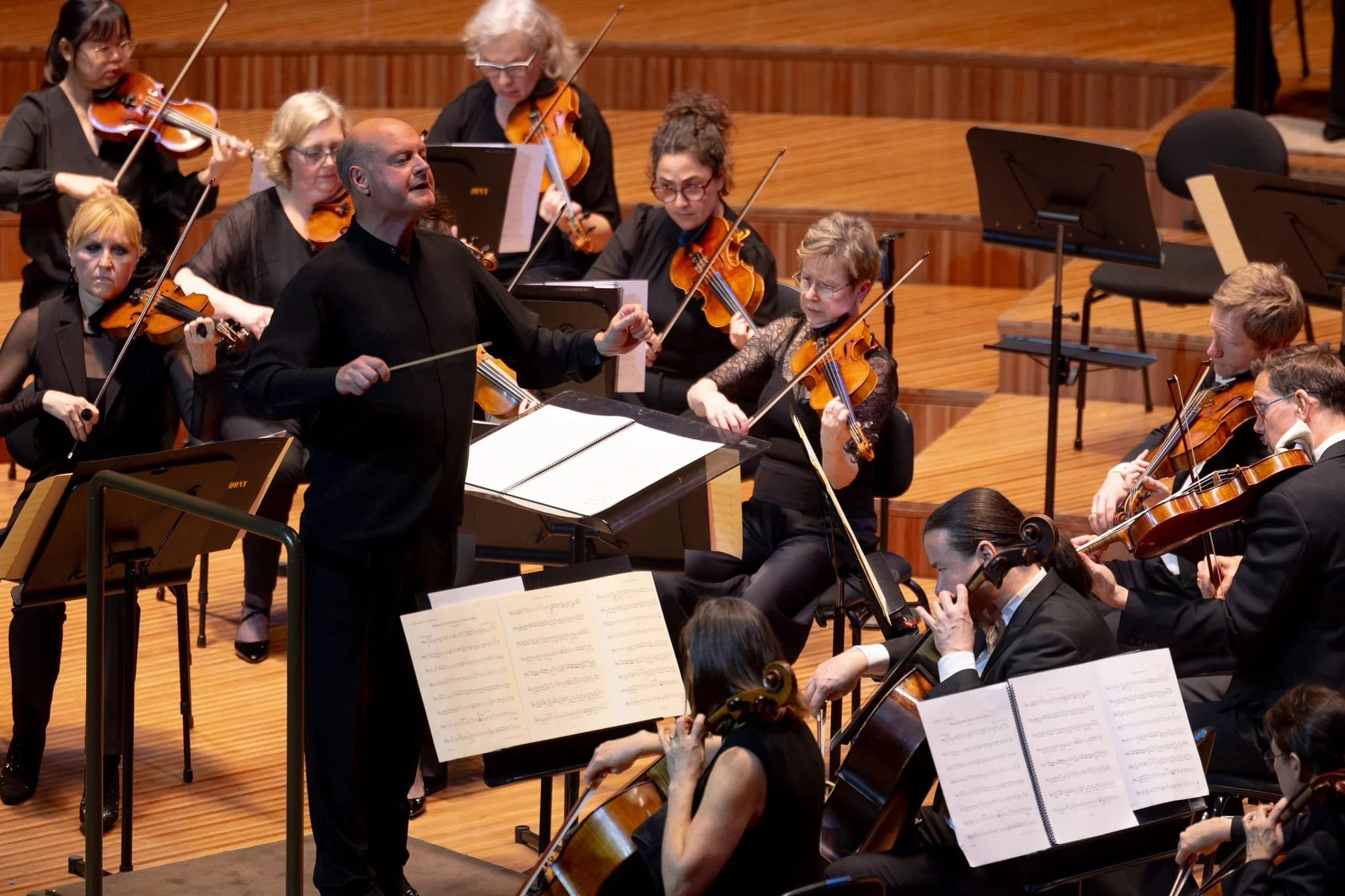
Photo credit: Symhony Symphony Orchestra
The program’s final work, John Rutter’s Gloria for choir and orchestra evoked celestial choirs and trumpets in a somewhat cinematic manner. The first movement elaborated fanfare motives on the brass before a second movement which juxtaposed filigree woodwind passages, subdued choral chords and bright penetrating solos. The finale conjured celebratory energy with irregular rhythm and metre, before a return of the opening brass passages. It was like an outdoor rally held for the Almighty.