Sir Stephen Hough. Classical Music Australia.
City Recital Hall. November 3
Stephen Hough began his recital with what looked like an historical sequence of Klaverstücke by Austro-German composers from the early nineteenth century to the twentieth. It was only when he followed Stockhausen’s shortest Klavierstücke with Beethoven’s shortest Bagatelle, Opus 119, No. 10 that it became apparent that the series was not driven solely by chronology, but also by duration. After Schubert’s wonderfully expansive Klavierstück in E flat, D 946, No. 2, the pieces by Brahms (Opus 118, No. 6), Schoenberg (Opus 19) and Stockhausen (Klavierstück III) were all progressively shorter, reaching a reductio ad absurdum in Beethoven’s comically brief, 12-bar piece. Nevertheless, the historical aspect was also interesting revealing a trend towards increasing terseness and fragmentation.
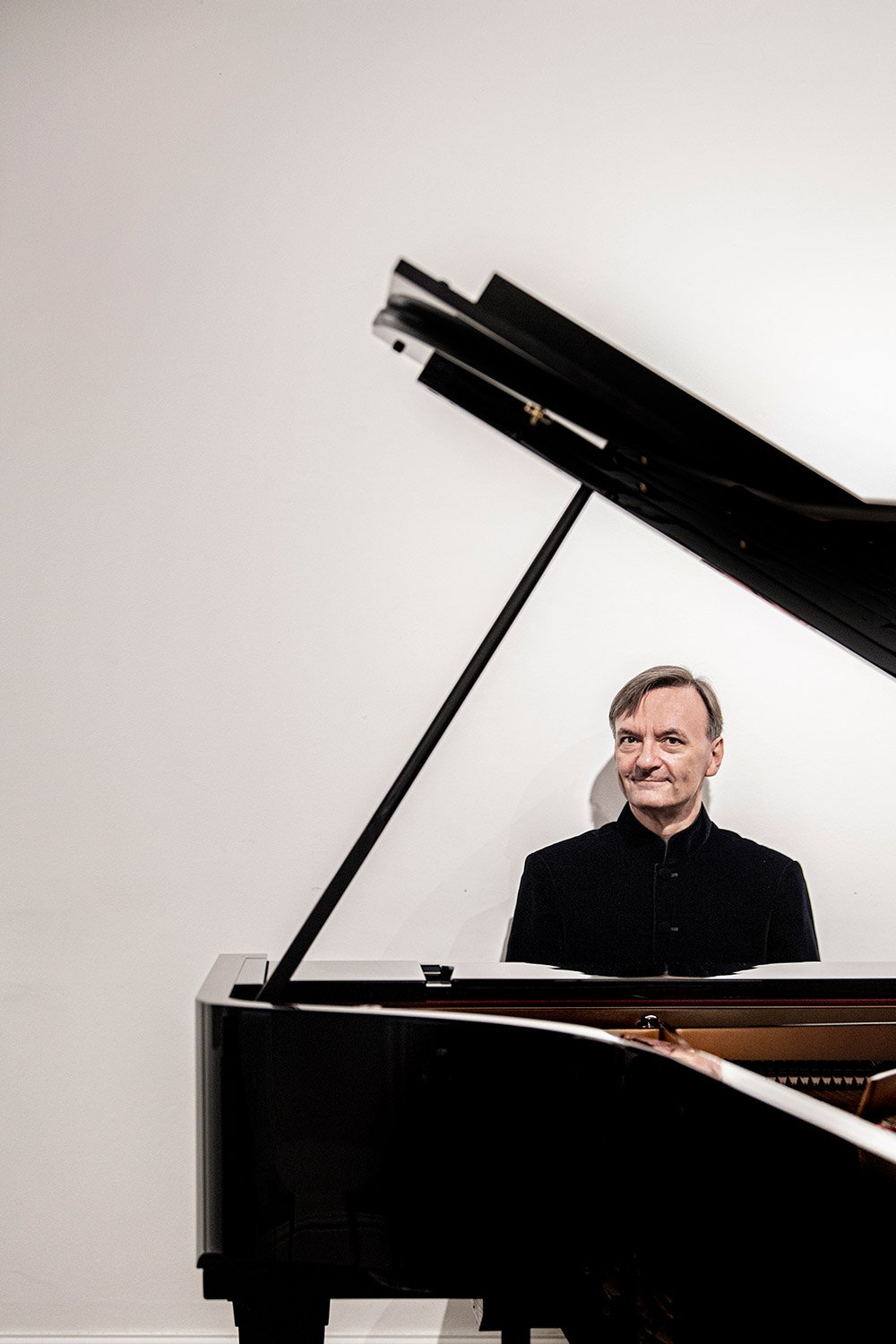
Image: stephenhough.com
Hough began Schubert’s Klavierstück, D 946, No. 2 with a tone of gentle softness, allowing the sound to open out as the line expanded. With subdued dynamics, murmuring thirds and sudden cross-accents, the first episode darkened subtly to a mood of suppressed agitation before the tension was calmed as the idea moved into a higher register. The sequences of the second episode arched with subtle poignancy, creating a sense that the flow of ideas might go on forever (what Schumann called Schubert’s ‘heavenly length’). The opening theme of Brahms’ Intermezzo, (No. 6 of the Klavierstücke Opus 118), had wistful, veiled longing, without overemotional heaviness, leading to a taut, determined central section. Schönberg’s 6 Kleine Klavierstücke, Opus 19 are an exercise in compressed, utterance, a path followed subsequently in an even more obsessive manner by Schönberg’s pupil Webern. In the first piece, Hough lightly brushed delicate ornamental passages while the repeated third that sounds throughout the second was quietly insistent without being ominous.