“My subject is War and the pity of War.
The poetry is in the pity…
All a poet can do today is warn.”
Wilfred Owen
Quoted by Benjamin Britten on the title page of War Requiem
Britten’s War Requiem. Sydney Philharmonia Festival Chorus, Chamber Singers, Symphony Chorus, Vox, Conservatorium High School Treble Voices. Sydney Youth Orchestra. Sydney Philharmonia Orchestra. Opera House Concert Hall
October 17 2026
Four and a half stars
With 559 performers, including two orchestras, five choirs, two organs and three conductors, this performance of Britten’s War Requiem, Opus 66 (1961) - his monumental prayer for, and execration of, the colossal suffering of the twentieth century’s catastrophic wars - was ambitious in aspiration and triumphant in execution. More than that it unfolded the piece’s emotional complexities and contradictions, rawness and transcendence in a way that was deeply true to the pacifist Britten’s own conflicted voice.
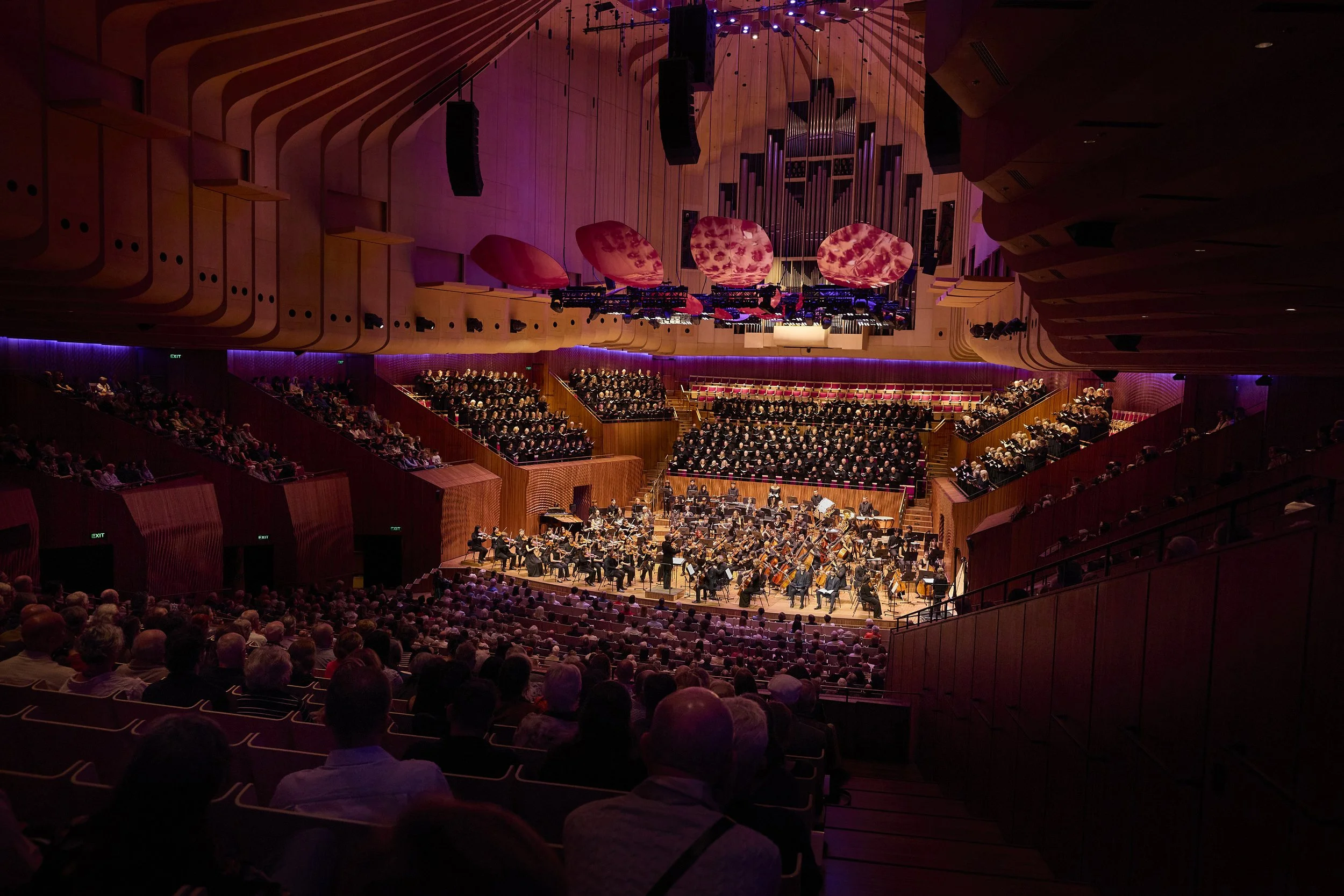
Combined Philharmonia Choirs, Sydney Philharmonia Orchestra and Sydney Youth Orchestra under Brett Weymark Images Keith Saunders
When asked to write a work for the opening of the rebuilt Coventry Cathedral (the previous fourteenth century building having been destroyed in a WWII bombing raid), Britten, in a masterly stroke of imagination, conceived the idea of binding together the solemn formality of the requiem mass, sung by the main choir and full orchestra (conductor Brett Weymark), with the deeply personal subjectivity of World War I poet, Wilfred Owen, sung by tenor (Kyle Stegall) and baritone (Jeremy Kleeman) and accompanied with transparent astringency by a separate chamber orchestra (conductor Elizabeth Scott).
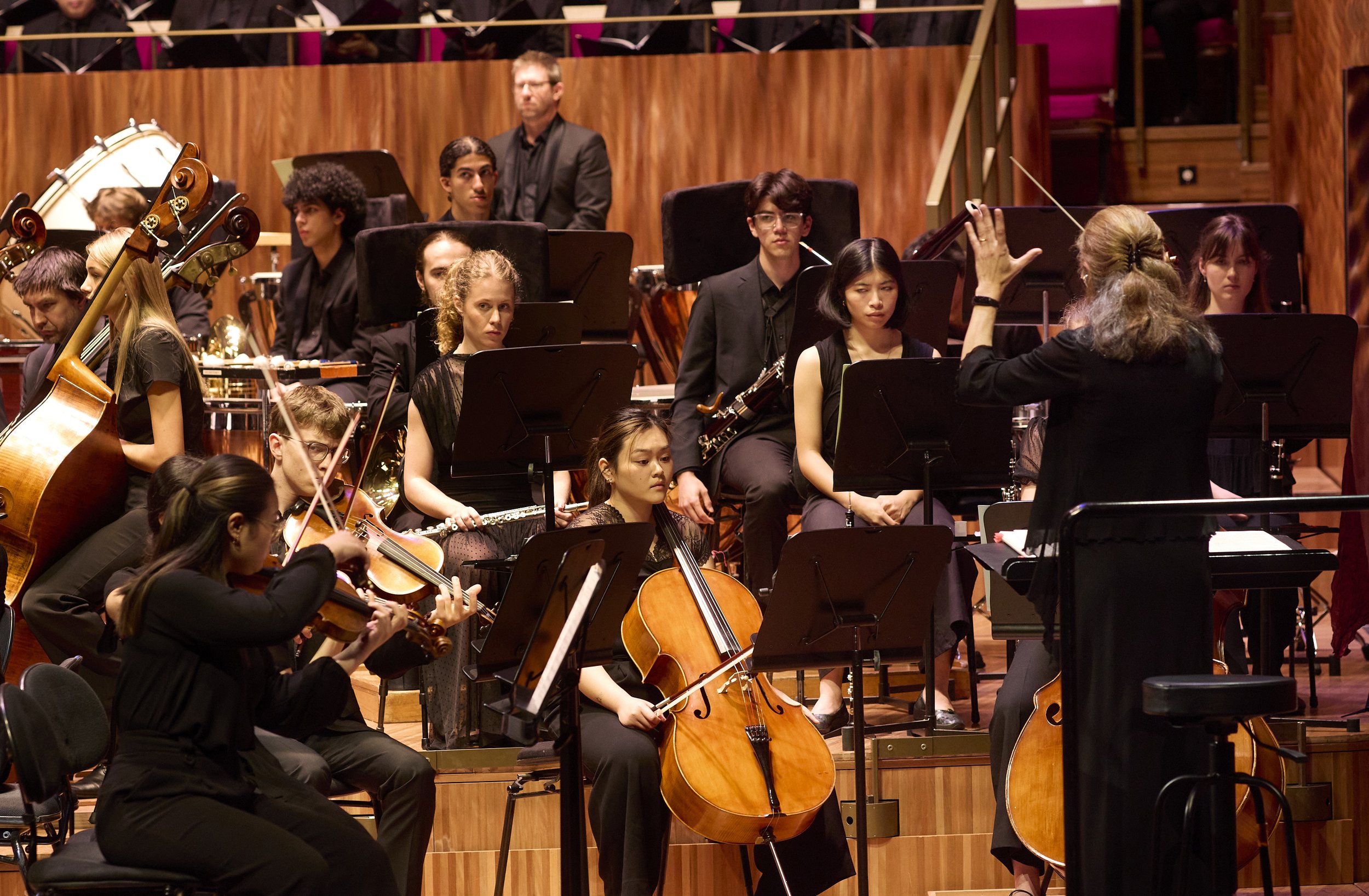
Chamber orchestra under Elizabeth Scott. Image Keith Saunders
The juxtaposition of medieval and and twentieth-century texts in the requiem reflects the layout of the rebuilt cathedral (designed by architect Basil Spence) in which the bombed fourteenth century ruins stand beside the new building as a symbol of remembrance, creation, destruction and rebirth. The asymmetrical, expressively divergent performance forces of Britten’s work engage in a tussling yet deeply touching dialogue throughout and Weymark and Scott just managed to accommodate their respective groups by using a crowded concert hall stage, the choir stalls, organ loft and the eastern and western galleries. Glowing above these from the far north-eastern corner of the hall was the children’s choir (Conservatorium High School Treble Voices) with its own chamber organ (conductor Michael Bradshaw) representing the voice of as as-yet uncompromised innocence.
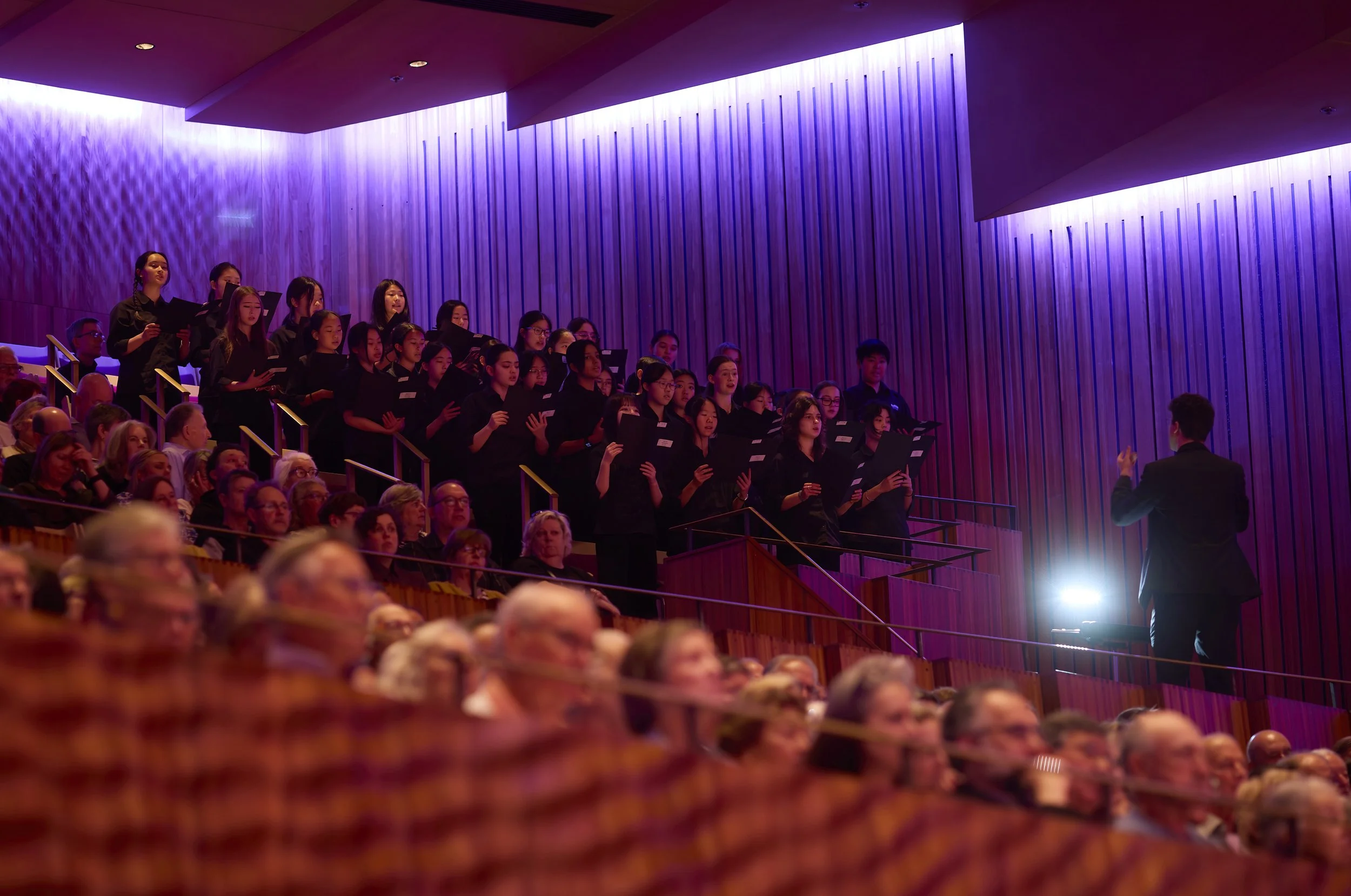
Children’s Choir in north east gallery under Michael Bradshaw. Image Keith Saunders
Britten’s opening Requiem Aeternam asks for peace but is itself troubled, underlayed by an angular unison theme on lower strings (reminiscent of Shostakovich) and with ominous bells sounding a tritone, like the warning Owen mentioned in the quotation (above) that Britten placed on the title page of the score. The sometimes spiky textures resisted the traditional expectations of pious comfort before being halted by a seraphic but austere, chant-like melody from the children’s choir. Tenor Kyle Stegall returned to the agitated mood for Owen’s What passing bells for those who die as cattle? He sang with a voice of light transparency and expressiveness, softening subtly for the last couplet, Their flowers the tenderness of silent minds, And each slow dusk a drawing-down of blinds (Britten changed Owen’s original words, ‘patient minds’, perhaps because he wanted words that evoked the sonic realm). There was a short moment of well-balanced, soft warmth from the combined full choirs in the short Kyrie that followed, before they launched into the jabbing Dies Irae, shot through with brass fanfares that sound like demonic parodies.
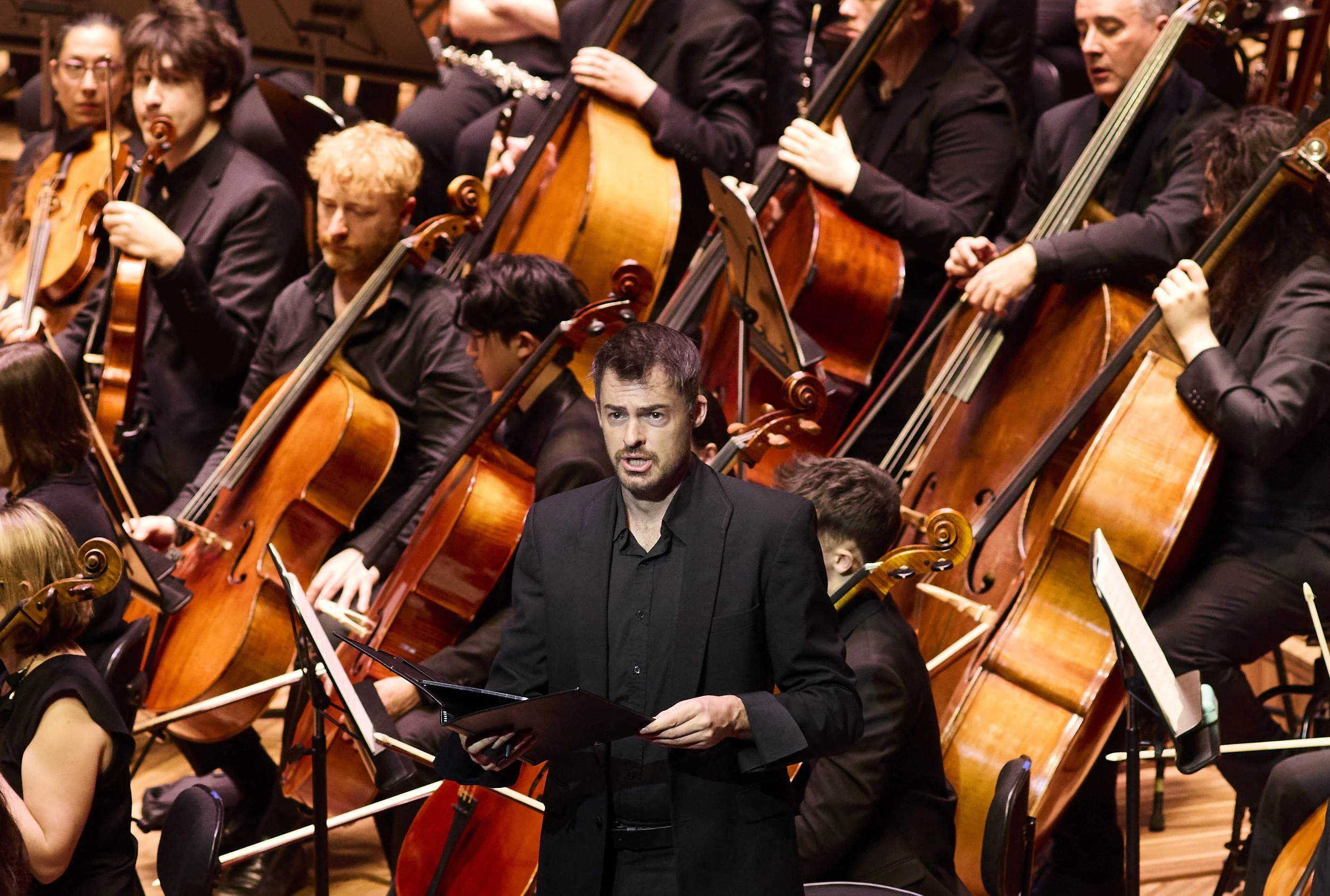
Tenor Kyle Stegall. Image Keith Saunders
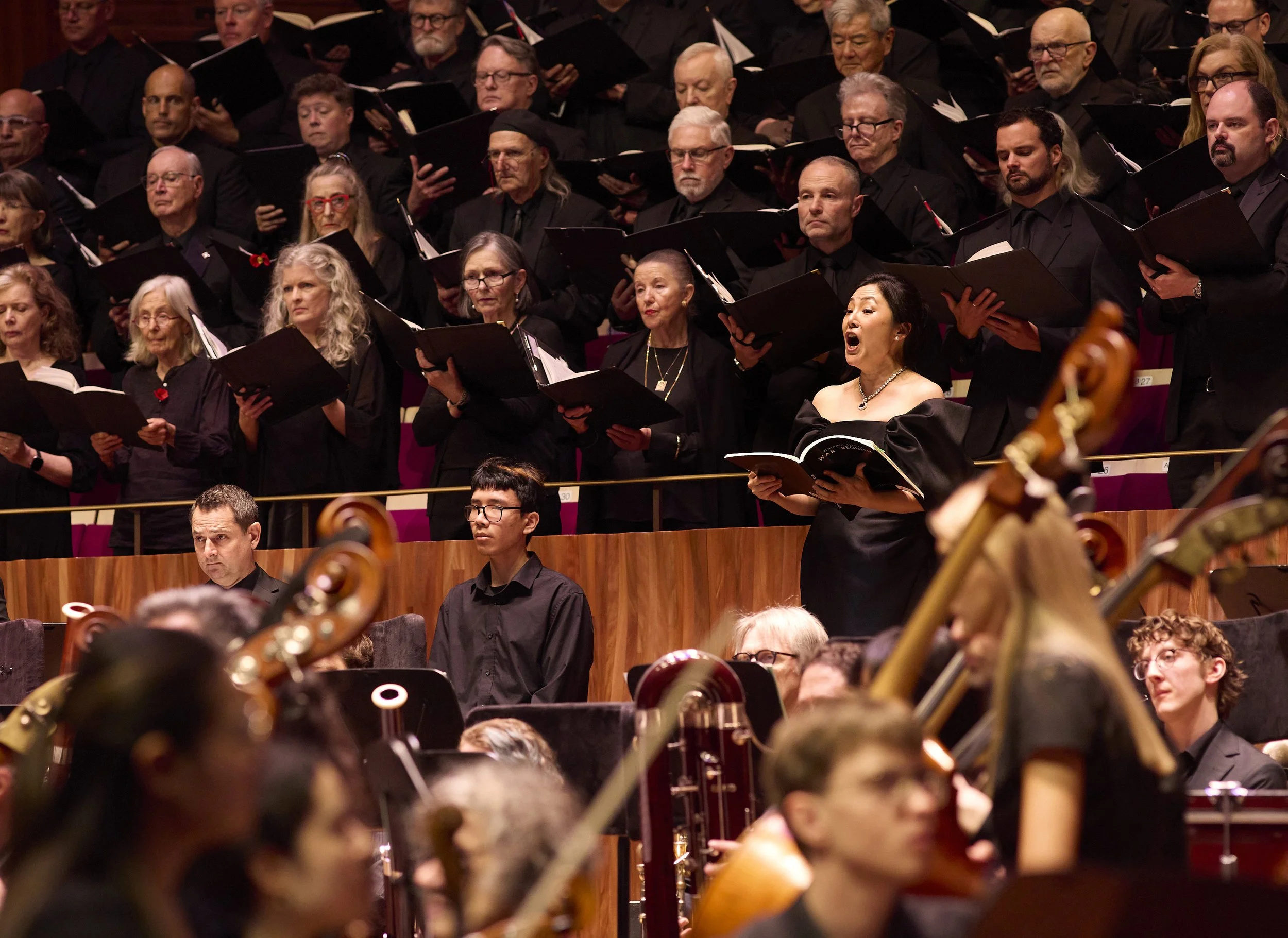
Eva Kong with Sydney Philharmonia Choirs and Sydney Youth Orchestra. Image Keith Saunders
In Bugles sang, saddening the evening air, baritone Jeremy Kleeman displayed a rich velvety tone, combining substance and nuanced expressiveness. Singing with the full choir and orchestra, soprano Eva Kong had glowing declamatory strength for the Liber scriptus proferetur, and the choral textures became scattered in the lead up to the darkly sardonic cheerfulness of the tenor and baritone duet Out there, we’ve walked quite friendly up to Death. In the Ricordare, Weymark balanced the smooth mellifluousness of the women’s voices and the flowing orchestral accompaniment judiciously. Kleeman returned with premonitory firmness for Be slowly lifted up, thou long black arm, before the turbulence of the Dies Irae returned. Britten intermingles the Lacrimosa for full choir and soprano with the tenor solo Move him into the sun, and in this passage Stegall and Kong jointly created the performance’s tenderest moments .
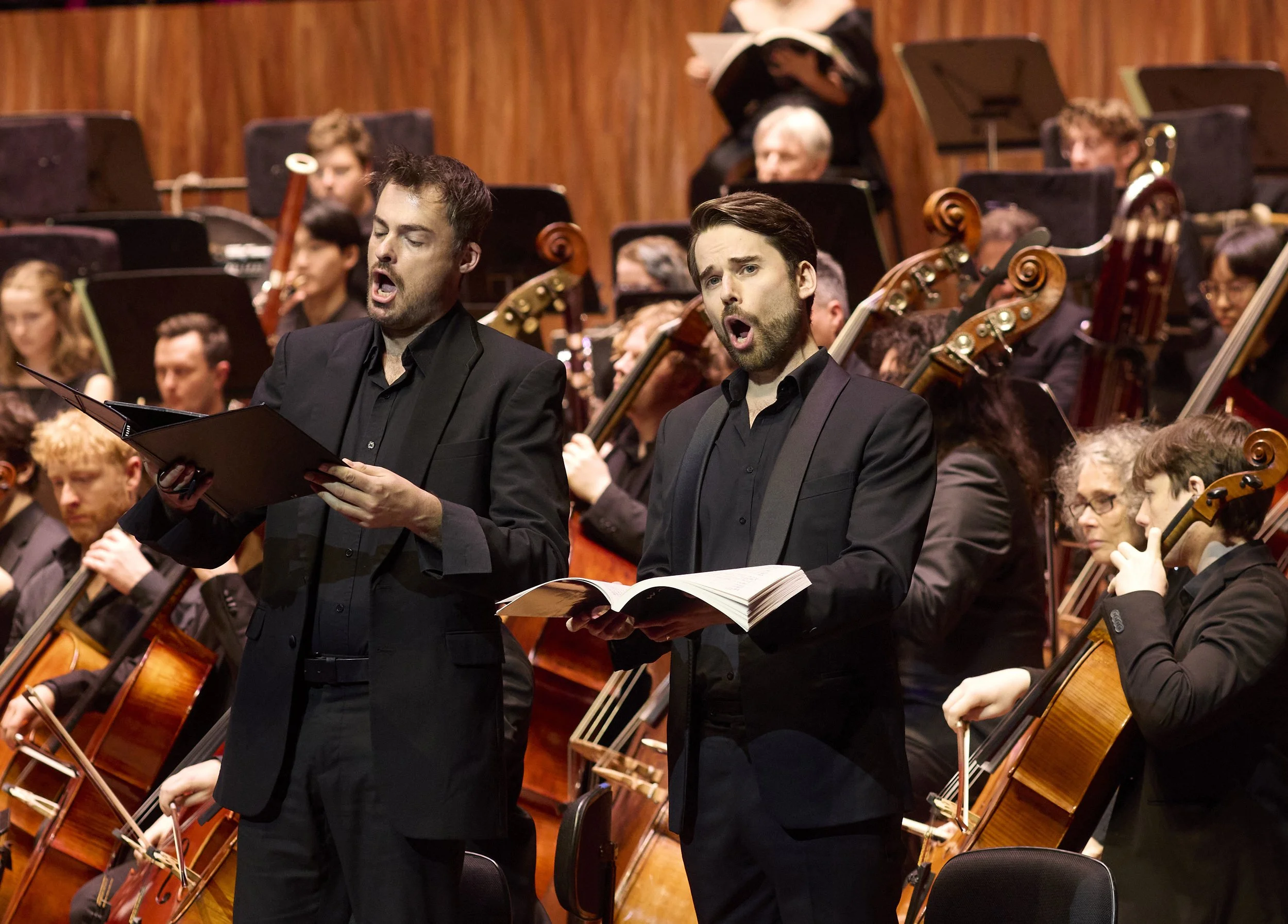
Kyle Stegall and Jeremy Kleeman. Image Keith Saunders
But it is only after the quiet stillness of Owens’ Strange Meeting (which Britten abbreviated, omitting some memorable lines) and the floating In paradisum from the children’s choir, that all groups finally come together in momentarily exultant harmoniousness. The warmth of the chords first heard in the Kyrie returned briefly for Requiescant in pace, but the tritones from the bells remained.
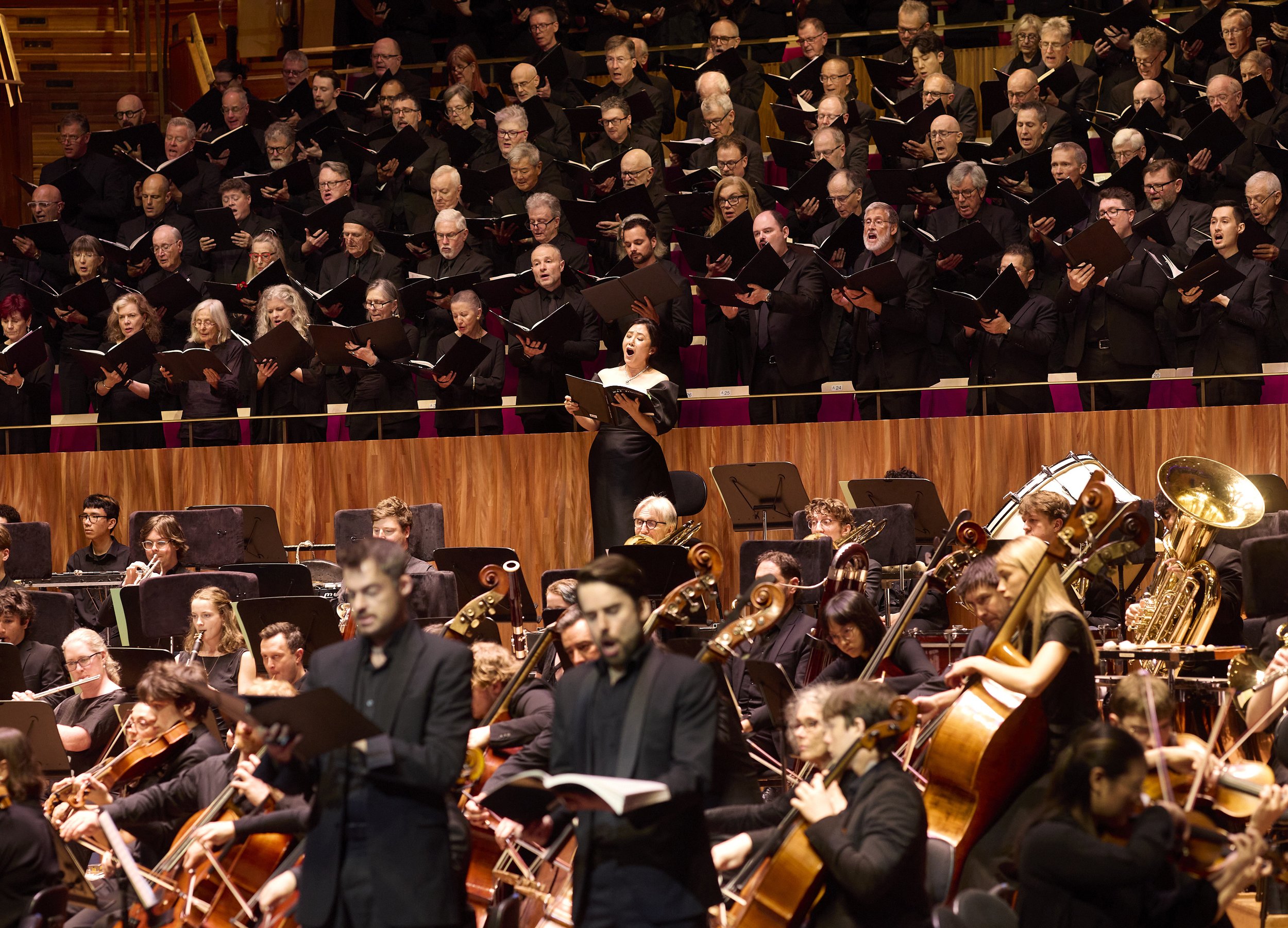
Eva Kong, Kyle Stegall, Jeremy Kleeman with Sydney Philharmonia Choirs, Sydney Philharmonia Orchestra and Sydney Youth Orchestra. Image Keith Saunders